English
 Vietnamese

Table of Contents
- Solutions for Emission Reduction in Rice Fields
- Practical Results from Pilot Models
- Expanding to Livestock and Aquaculture
- The Role of Forestry and Technology
- Common Goal: Reducing Emissions, Increasing Efficiency
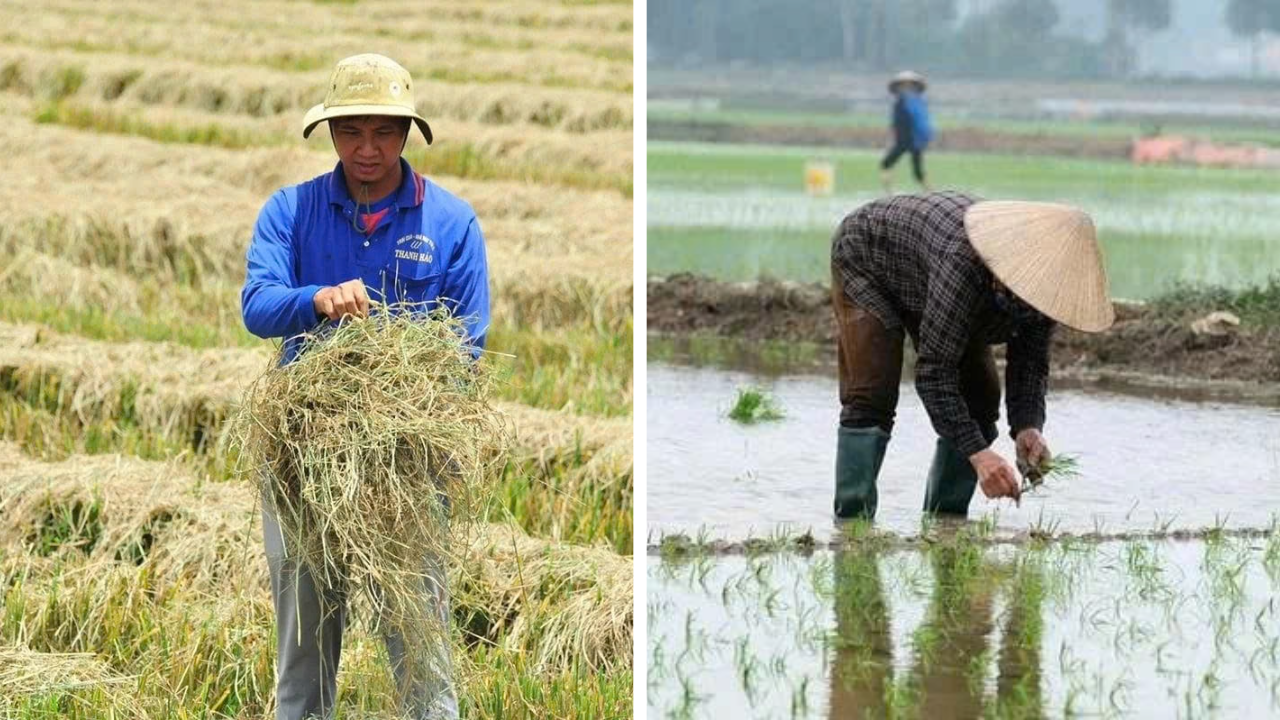
The Mekong Delta (ĐBSCL) – Vietnam's largest rice-producing region – is becoming the focal point of strategies to reduce emissions in agriculture. Seemingly small changes in rice fields, from irrigation methods to straw collection and input management, are paving the way for a new approach that helps agriculture save costs while meeting sustainable development requirements.
Solutions for Emission Reduction in Rice Fields
One of the significant advancements is the adoption of the Alternate Wetting and Drying (AWD) irrigation model instead of continuous flooding. AWD not only reduces the number of irrigation cycles, saving electricity and water costs, but also significantly cuts methane emissions from rice fields.
Additionally, local authorities encourage farmers not to burn straw but to collect it for composting or as a substrate for mushroom cultivation. This dual-purpose solution reduces air pollution while creating additional income for farmers.
Notably, the "1 Million Hectares of High-Quality Low-Emission Rice" project is being actively implemented. Farmers are guided to record detailed data on water usage, fertilizers, and pesticides according to emission reduction standards. The use of biological pesticides is also promoted, reducing dependence on harmful chemicals.
Practical Results from Pilot Models
According to Deputy Minister of Agriculture Trần Thanh Nam, pilot models in the Mekong Delta have demonstrated:
- Reduced production costs
- Increased productivity
- Significant emission reductions
- Higher profits for farmers
More importantly, farmers' mindset has shifted from agricultural production to agricultural economics, focusing on value addition and green markets.
Expanding to Livestock and Aquaculture
Emission reduction solutions are not limited to rice but are also spreading to livestock and aquaculture.
In livestock farming, many farms are adopting biogas systems to process manure, reusing waste as organic fertilizer, and adjusting feed composition to reduce methane emissions.
In aquaculture, the Recirculating Aquaculture System (RAS) is being implemented to minimize waste discharge, save water, and reduce pollution. Farmers are also installing rooftop solar panels to power aerators, reducing electricity costs and CO₂ emissions.
The Role of Forestry and Technology
In mountainous areas, forestry plays a crucial role in carbon absorption, balancing the total emissions of the agricultural sector. Local authorities are promoting sustainable forest management, obtaining FSC certification, and applying remote sensing technology to digitize forest areas. The REDD+ program continues to expand, aiming to participate in the carbon credit market.
Additionally, digital transformation in irrigation and energy-efficient mechanization contributes to emission reduction. Many agricultural processing plants have installed solar panels for cold storage, the largest electricity consumer in the value chain.
Common Goal: Reducing Emissions, Increasing Efficiency
The common thread among these solutions is reducing emissions without increasing production costs. From rice fields to farms, forests, and shrimp ponds, these models are not just policies but bring tangible benefits: saving inputs, reducing environmental risks, and opening doors to markets requiring green standards.
Rice fields – where every change is visible through each crop season – are becoming the starting point for low-emission agriculture. As "green" rice grains find their place, other sectors will gain momentum to transition, creating a comprehensive transformation for Vietnam's agricultural industry.
Source: Bá Thắng - Agriculture and Environment