English
 Vietnamese

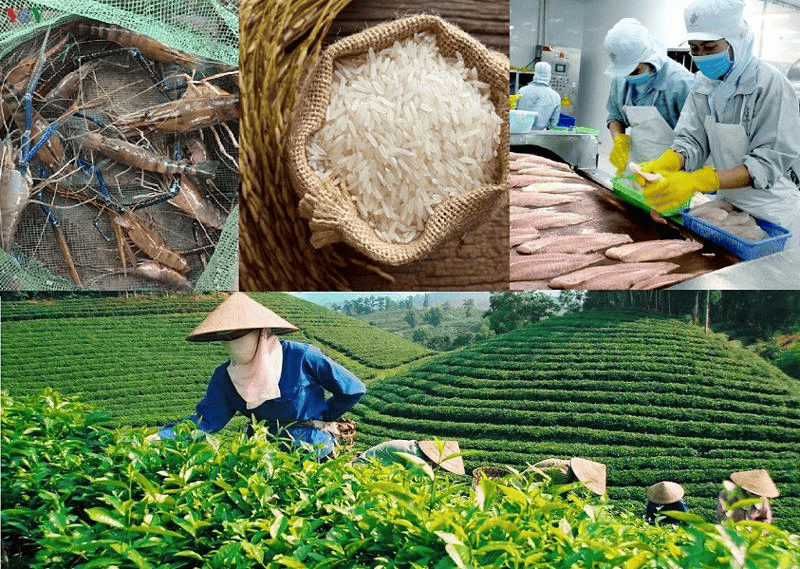
The total export value of agricultural, forestry, and fishery products, along with trade surplus, has set new records, reaching $62.5 billion, an increase of 18.7%, and $17.9 billion, an increase of 46.8%. Vietnamese agricultural products are now present in 200 countries and territories, capable of meeting the demands of the most discerning markets.
According to Minister of Agriculture and Rural Development Le Minh Hoan, this achievement is the result of a significant shift in production mindset, from agricultural production to agricultural economics. Localities and enterprises have proactively grasped market trends, thereby creating leverage for the entire sector's growth.
Success Across Multiple Fields
According to the General Statistics Office, Typhoon No. 3 caused significant damage to agricultural, forestry, and fishery production activities in northern provinces. The value of annual crop production in the affected provinces decreased by 7.2% in the third quarter compared to the same period last year; perennial crops decreased by 13%. The impact of the typhoon continued into the fourth quarter, with the autumn-winter rice crop production in northern provinces decreasing by 584.8 thousand tons compared to the previous autumn-winter crop; the value of annual crop production in the fourth quarter in the affected provinces continued to decrease by 5.6%; perennial crops decreased by 5.1%. However, the growth of the agricultural, forestry, and fishery sector in 2024 still reached 3.27%.
Mr. Dau Ngoc Hung, Director of Agricultural, Forestry, and Fishery Statistics, General Statistics Office, assessed that there are several factors contributing to the positive growth results of the agricultural sector throughout the year.
Firstly, timely direction and support from various levels and sectors, along with the proactive response and recovery efforts of localities, helped mitigate the damage caused by the typhoon and quickly restore production.
Additionally, the positive contributions from livestock, forestry, and fishery activities in unaffected regions helped compensate for the typhoon's damage. The production of live pigs in 2024 is estimated to increase by 6.6% compared to the previous year (Q4 increased by 8.6% compared to the same period), with some provinces in the Central Highlands and Southeast regions seeing high pig production due to large-scale livestock projects. Poultry meat production for the year increased by 5.4% (Q4 increased by 6.4%).
The forestry sector saw a significant increase in timber extraction, with annual timber production estimated to increase by 7.9% (Q4 increased by 9.6%). The export value of timber and timber products in 2024 reached $16.3 billion, an increase of 20.9% compared to 2023.
Aquaculture activities continued to develop well, especially in the key Mekong Delta region (accounting for over 70% of the country) with high-value products such as farmed shrimp and pangasius increasing significantly. Farmed shrimp production in 2024 increased by 5.6% (Q4 increased by 7%); pangasius increased by 4.8% (Q4 increased by 5.3%). Seafood exports for the year exceeded $10 billion, an increase of 11.9% compared to 2023.
Furthermore, despite the significant reduction in autumn-winter rice crop production due to the typhoon, the total rice production for 2024 still reached nearly the same level as 2023, thanks to increases in the winter-spring crop by 145 thousand tons; summer-autumn crop by 139.1 thousand tons, and autumn-winter crop in the Mekong Delta by 118.5 thousand tons. Rice prices increased significantly (average annual increase of 15.6%), and rice exports in 2024 increased by 11.2% in volume and 21.2% in value compared to 2023.
Striving to Maintain Growth Momentum
The Ministry of Agriculture and Rural Development continues to promote trade, open markets, and negotiate to remove technical and trade barriers, aiming to expand official export markets for more agricultural products into traditional markets and major export markets such as China, the USA, the EU, Russia, Brazil, Japan, and South Korea. Special attention is given to opening new, potential markets like the Halal food market in Muslim countries, the Middle East, and Africa.
The Ministry will also continue to collaborate with other ministries, especially the Ministry of Industry and Trade, to proactively and effectively implement free trade agreements, regional agreements, and bilateral agreements with other countries. The Ministry, along with embassies, trade counselors, and agricultural counselors, will gather and provide information on market preferences and demands, effectively communicating this to the business community, farmers, and localities. Additionally, it will support and connect businesses to participate in trade promotion, and product advertising, and link official export activities with diplomatic efforts in major markets and effectively exploit potential markets.
Vietnamese agriculture is developing towards a circular economy, but this cycle is still in its early stages. Vietnam still sells raw rice, while by-products like husks, bran, and straw can be used to create products such as growing media, pellets, or combined with biological products to create organic fertilizers, regenerating the soil.
In 2025, the entire agriculture and rural development sector aims to achieve a GDP growth rate of 3.3 - 3.4%; total export value of agricultural, forestry, and fishery products of $64 - $65 billion; and over 80% of communes meeting new rural standards.
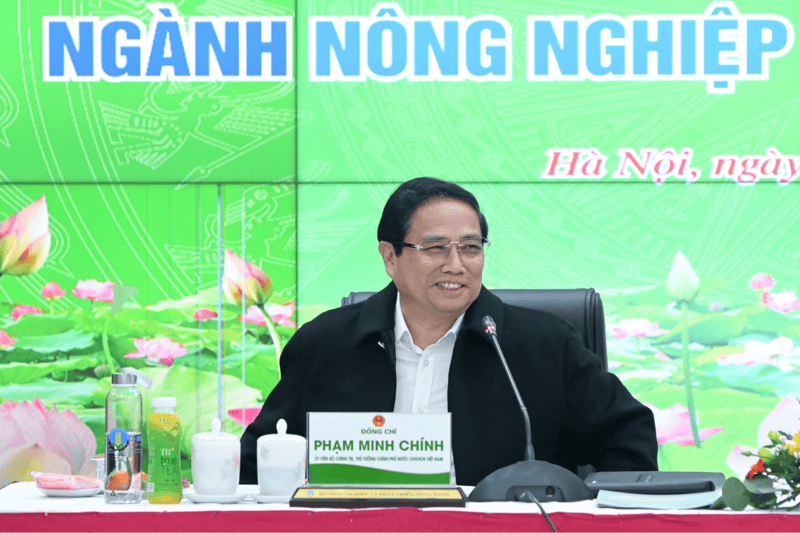
At the 2024 year-end review conference and the 2025 plan implementation conference, Prime Minister Pham Minh Chinh acknowledged, praised, and highly appreciated the efforts and results achieved by the agriculture and rural development sector, which have significantly contributed to the overall achievements of the country. The Prime Minister directed the agriculture sector to improve planning, develop strategies, complete institutions, policies, and mechanisms, and remove bottlenecks for rapid and sustainable development. He emphasized the need to promote the application of science and technology, innovation, digital transformation to develop a green economy, digital economy, circular economy, and knowledge economy, contributing effectively to climate change mitigation, especially in key areas, with the goal of ensuring farmers are prosperous and happy, rural areas are modern, and agriculture is advanced.
Growtech Vietnam 2024 – A Technological Launchpad for Modern Agriculture
As an international exhibition specializing in agriculture, forestry, and fisheries, Growtech Vietnam 2024 will showcase a wide array of advanced technologies, smart solutions, and modern equipment for production, agricultural value chain management, and climate change adaptation.
Participating in Growtech offers businesses the opportunity to: ✅ Connect with domestic and international partners ✅ Update on trends in Agriculture 4.0 technology ✅ Stay ahead of industry development policies ✅ Establish their brand in both domestic and export markets
Ho Chi Minh City: October 8 – 10, 2024 – SECC, HCMC
Hanoi: December 10 – 12, 2024 – ICE, Hanoi
Register your booth today to secure a prime location and receive exhibition incentives: ? https://growtech.vn/exhibitors/book-a-stand
SOURCE: https://nhandan.vn/nong-nghiep-lap-nhieu-ky-luc-moi-post855904.html