English
 Vietnamese

Fueled by positive market trends observed since the beginning of the year and swift adjustments in planning, Vietnam's agriculture and environment sectors are setting their sights on achieving a robust 4% growth rate in 2025. This ambitious goal is closely tied to the target of reaching $65 billion USD in total exports for the agricultural-forestry-fishery (AFF) sector.
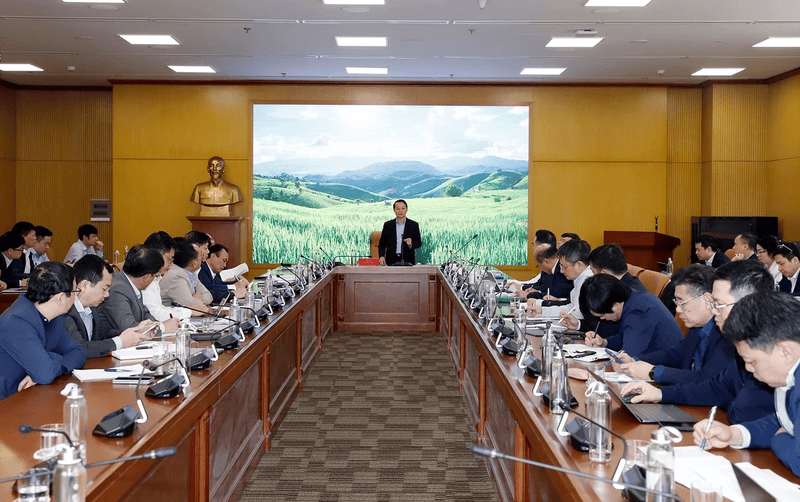
Meeting to review the Action Plan to implement the growth target of the agriculture and environment sector and total export turnover of agriculture, forestry and fishery products in 2025 on April 1 at the Ministry of Agriculture and Environment. Photo: Khuong Trung.
Expanding Markets, Optimizing Production
At a meeting held on April 1st, Minister of Agriculture and Environment Do Duc Duy chaired a review session on the action plan aimed at ensuring a 4% growth rate for the sector and fulfilling the total agricultural-forestry-fishery (AFF) export turnover goal for the year.
The Ministry emphasized that expanding export markets, optimizing production, and ensuring timely, data-driven policy adjustments will be crucial to realizing the sector’s goals amid a dynamic global trade environment.
The goal set for growth is maintaining the added value of the AFF area from 4% upwards. Within this, the added value of the agricultural sector is expected to reach 3.85%, the crop production sector is expected to hit between 2.4% and 2.9%, and livestock production from 5.7% to 5.98%. The fishery sector is projected to increase by 4.35%, and forestry is aiming for a growth rate of 5.47%.
Simultaneously, alongside the growth target, the agricultural sector is aiming for a total AFF export value of $65 billion USD, striving to reach the milestone of $70 billion USD.
One of the priorities, according to Mr. Ngo Hong Phong, Director of the Department of Quality, Processing, and Market Development, is the removal of technical barriers to achieve the previous goal.
However, in the first quarter of this year, fruit and vegetable exports decreased by 11.3% compared to the same period in 2024. To address this issue, the Department will collaborate with the Vietnam Agriculture and Rural Newspaper to organize the 970 Agricultural Connection Forum. This forum will focus on the fruit and vegetable sector and will discuss potential solutions.
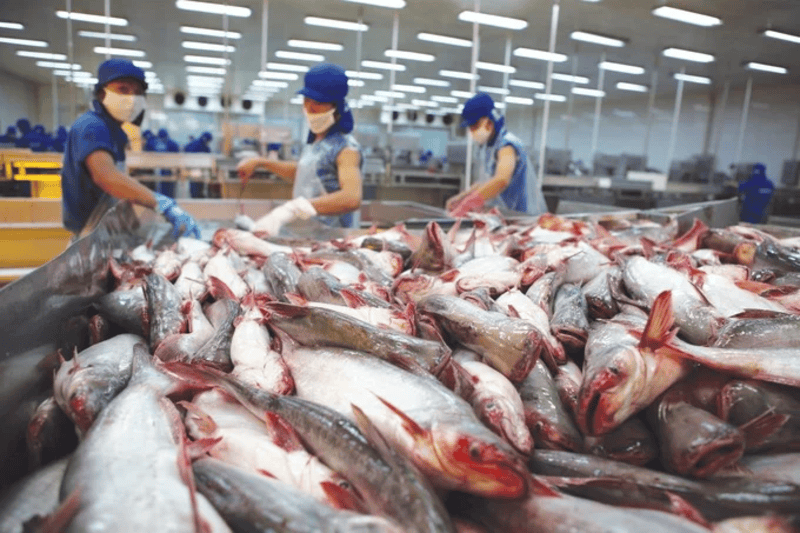
Pangasius is one of Vietnam's largest seafood exports to the Middle East. Photo: Le Hoang Vu.
Currently, the Department of Cooperative Economy and Rural Development is concentrating on expanding the pilot program to establish raw material zones, as well as reviewing and modifying policies that support cooperatives, businesses, and farmers in developing domestic production.
According to Director Le Duc Thinh, the raw material zone initiative is currently being implemented in 11 provinces, focusing on key crops in major production regions across the country. The Department is also prioritizing infrastructure investment in these zones, reorganizing production, and promoting stronger linkages between cooperatives and enterprises, in addition to scaling up production.
The Department has finalized a handbook on the establishment of raw material zones to ensure its successful implementation. Its next goal is to resolve the current obstacles associated with these regions. In particular, it is anticipated that land investment policies tailored to raw material areas will create more favorable conditions for enterprises and cooperatives to sustain consistent production.
Determined to Achieve a Breakthrough
Minister of Agriculture and Environment Do Duc Duy concluded a crucial conference on agricultural development strategies by emphasizing the importance of close coordination among all departments and agencies in developing and finalizing their respective detailed action plans. A firm deadline of April 5th has been set.
The Minister stressed the importance of closely aligning implementation plans and scenarios with the master plans, programs, and strategic projects already defined by the government. He noted that while the initial growth objective was 3.5%, the adjustment to 4% necessitates accelerating certain tasks previously scheduled for the long term.
He observed that a critical set of solutions must focus on enhancing productivity, quality, and efficiency in the production and business activities of the agricultural, forestry, and fishery industries. Minister Duy asserted that the sector's restructuring should prioritize improving product quality and added value, alongside productivity, emphasizing the necessity of comprehensive administrative reform to streamline procedures and reduce the time required for research and implementation of new projects and products in agriculture.
The Minister encouraged all relevant entities to prioritize international integration in their upcoming science and technology strategies. He also agreed with proposals to establish reputable, high-quality agricultural brands and suggested that the action plan should include additional measures to enhance public communication, food safety, and processing.
Minister Duy expressed confidence that the 4% growth objective is still achievable with the concerted efforts of relevant units and agencies, despite the first quarter having concluded and only three more quarters remaining. However, he emphasized that this would require more concrete and clearly defined solutions, particularly in the areas of task assignments, responsibility allocation, and deliverables deadlines.
He directed the Department of Planning and Finance, along with the appropriate departments and directorates, to expedite the review of current plans and to propose the necessary modifications and supplementary solutions, specifically underscoring the need to explicitly designate lead and coordinating units to prevent overlapping responsibilities and ensure the successful execution of tasks and solutions.
According to the Minister, the AFF sector's growth indicators in the first quarter of 2025 are showing promising signs. Initial objectives are anticipated to be exceeded in the agriculture and fisheries segments, which are projected to grow by approximately 3.69%.
Source: Khuong Trung - Quynh Chi (Báo Nông Nghiệp Việt Nam)