English
 Vietnamese

In 2025, the livestock industry aims to increase its total production value by approximately 4 - 5% compared to 2024. The livestock sector is estimated to account for 28 - 30% of the total agricultural industry.
Targeted Livestock Production of Over 8.6 Million Tons
According to the Department of Livestock Production under the Ministry of Agriculture and Rural Development (MARD), the livestock sector aims to achieve a 4 - 5% growth in production value in 2025 compared to 2024. The sector is expected to contribute 28 - 30% to the total agricultural industry.
The total output of live-weight meat is projected to exceed 8.6 million tons (up 4.5%), including over 5.4 million tons of live-weight pork (up 5%), over 2.53 million tons of poultry meat (up 4.2%), around 21 billion eggs (up 4%), more than 1.25 million tons of milk (up 4.8%), 26,000 tons of honey (up 9.2%), and over 22 million tons of industrial animal feed (up 2.6%).
2024 remained a milestone year for the livestock sector, contributing over 26% of GDP, with an estimated 5.4% growth in livestock production compared to 2023. One of the driving factors was the increasing price of live pigs and decreasing animal feed costs, encouraging businesses to maintain and expand production.
Live pig prices surged from VND 52,500/kg to a peak of VND 69,000/kg (up 31.4% year-on-year) in the first half of 2024 due to limited supply. Prices later declined to around VND 60,000/kg but have started rising again. Pork prices are expected to continue increasing post-Tet due to high demand during the festive season.
Meanwhile, the prices of key animal feed ingredients decreased in 2024 compared to the previous year. Corn dropped by 15.7% year-on-year, soybean meal by 10.6%, and defatted rice bran by 7.9%.
According to MARD data, Vietnam's live-weight meat production increased by 3.5% in 2024, reaching 8.1 million tons, including 5 million tons of pork (up 3.7%) and 2.4 million tons of poultry (up 3.8%).
Latest data from the United States Department of Agriculture (USDA) shows that Vietnam ranked 4th in global pork consumption, with an estimated per capita pork consumption of 37 kg in 2024 and a compound annual growth rate (CAGR) of 3.8% from 2024 to 2026.
The Food and Agriculture Organization (OECD-FAO) predicts that from 2025 to 2033, global beef consumption will decline and be replaced by poultry, while pork consumption will continue rising slightly in low- and lower-middle-income countries.
Driving Reforms in the Livestock Sector
MARD has set a target for the livestock industry to grow by 4.0 - 5.0% in 2025, with a projected total live-weight meat output of 8.4 million tons, 20.2 billion eggs, 1.25 million tons of milk, and 22.05 million tons of industrial animal feed.
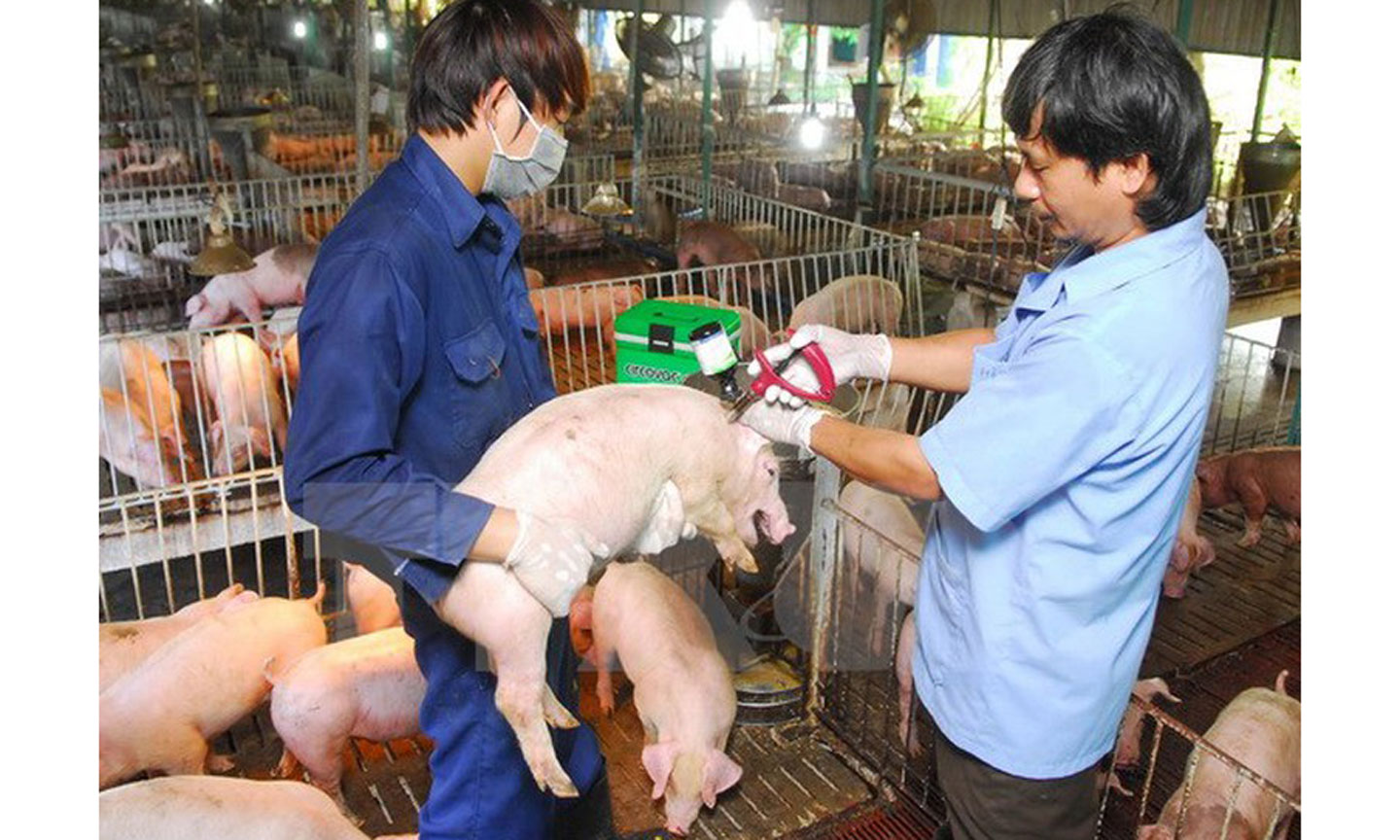
However, challenges such as disease control, livestock product imports, and slaughtering regulations remain major concerns in 2025. Additionally, administrative procedures and regulations on livestock materials and veterinary management continue to be complex, causing difficulties and increasing costs for farmers and businesses.
Deputy Minister of Agriculture and Rural Development, Phung Duc Tien, emphasized the need for the livestock sector to focus on climate change adaptation, advancing scientific research, improving breed quality, enhancing animal feed production, and ensuring biosecurity.
He also highlighted the importance of reviewing unsuitable regulations, enforcing stricter penalties for violations in animal husbandry and slaughtering, and strengthening vaccination efforts to establish biosecure zones.
Investment in integrated supply chains, circular economy models, and technological innovation should be prioritized to attract foreign partners, enhance branding, and meet international standards.
The livestock farming model is emerging as a key advantage in mitigating disease risks and feed price fluctuations. Large-scale livestock enterprises can more easily adopt advanced technologies, reducing production costs and improving efficiency.
Vietnam's pork production is projected to grow by 5% to around 8.4 million tons in 2025, thanks to better control of African swine fever and recovery efforts following Typhoon Yagi. Pork consumption in Vietnam is forecasted to reach approximately 3.9 million tons by 2025 and 4 million tons by 2030, with a growing annual demand for high-quality meat due to increasing health and food safety concerns.
As production costs continue to rise and disease threats persist, smallholder farming is expected to decline, shifting the industry toward more commercialized farming models. This shift is driven by large-scale livestock enterprises that have better infrastructure, capital, and technology adoption capabilities, making them more competitive in an evolving market.

Growtech Vietnam – A Technological Launchpad for Efficient Livestock Farming
Vietnam’s livestock industry faces both challenges and opportunities. Growtech Vietnam serves as a vital platform for technological advancements in the industry, promoting innovation for improved efficiency and biosecurity.
The event will feature modern livestock farming solutions aimed at optimizing production and ensuring food safety. Additionally, businesses will have the opportunity to explore innovative livestock farming models and gain insights into advanced technologies that can help improve production efficiency and competitiveness in the evolving livestock market.
Source: baoapbac.vn